Introduction
Having a pool in your backyard is a great way to beat the heat during the summer months. However, getting in and out of the pool can be a challenge, especially for children and older adults. One solution to this problem is to build a pool ladder out of PVC. PVC, or polyvinyl chloride, is a durable and affordable material that can be easily customized to fit your pool’s dimensions. In this article, we will discuss the benefits of using PVC for your pool ladder and provide a step-by-step guide on how to build one.
The Benefits of PVC
PVC is a popular choice for pool ladders due to its many benefits. Firstly, it is resistant to corrosion and rust, making it perfect for use in a wet environment like a swimming pool. PVC is also lightweight and easy to clean, requiring minimal maintenance. Additionally, PVC is a cost-effective material, making it an affordable option for those on a budget. Lastly, PVC is highly customizable, allowing you to design a ladder that suits your specific pool dimensions and aesthetic preferences.
Step-by-Step Guide
Materials Needed
Before you begin building your PVC pool ladder, gather the following materials:
- PVC pipes
- PVC connectors
- PVC glue
- Measuring tape
- Saw
- Sandpaper
- Marker
Measure and Cut the PVC
Start by measuring the height of your pool and the desired length of the ladder. Use a marker to make accurate measurements on the PVC pipes. Then, use a saw to cut the pipes to the desired lengths. Remember to account for the height of the ladder above the pool deck.
Assemble the Ladder
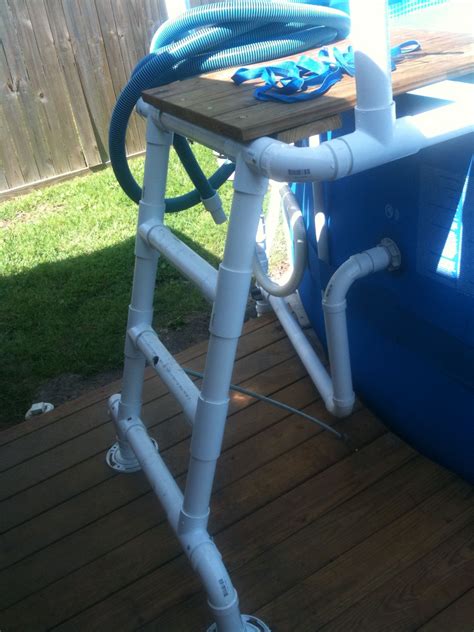
Next, assemble the ladder by connecting the PVC pipes using the PVC connectors. Apply PVC glue to the inside of the connectors before inserting the pipes to ensure a secure fit. Use sandpaper to smooth any rough edges or burrs on the cut ends of the pipes.
Attach the Ladder to the Pool Deck
Once the ladder is fully assembled, position it against the pool deck and mark the areas where it will be attached. Use screws or brackets to secure the ladder to the deck. Make sure the ladder is stable and can support the weight of multiple users.
Test the Ladder
Before allowing anyone to use the ladder, thoroughly test its stability and functionality. Ensure that all the connections are secure and that the ladder does not wobble or shift when weight is applied. If any issues are found, make the necessary adjustments or repairs before using the ladder.
Conclusion
Building a pool ladder out of PVC is a cost-effective and practical solution for improving pool access. PVC’s durability, resistance to rust, and ease of customization make it an ideal choice for this project. By following the step-by-step guide outlined in this article, you can create a sturdy and reliable pool ladder that will provide safe and convenient access to your pool for years to come.

