
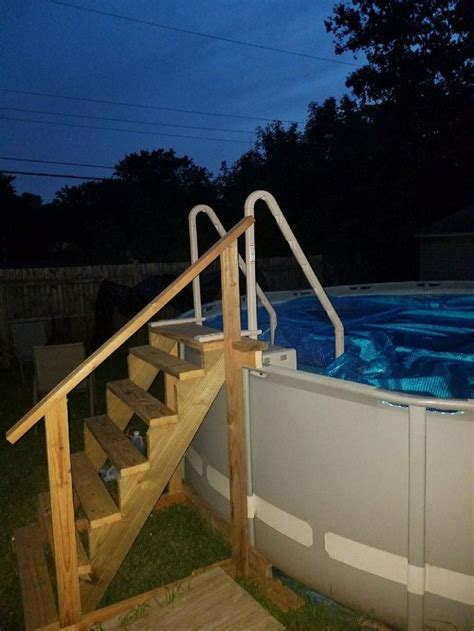
Introduction
Having a swimming pool in your backyard is a great way to enjoy the summer months and bring your family and friends together for some fun in the sun. However, if you have an inground pool, you may find it challenging to enter and exit the pool safely, especially for children and the elderly. In this article, we will discuss how you can build your own inground pool stairs to enhance the safety and accessibility of your pool.
Materials Needed
Before starting your DIY project, gather the necessary materials. You will need pressure-treated lumber, stainless steel screws, a circular saw, a drill, a level, and a measuring tape. It is crucial to use pressure-treated lumber to ensure the durability and longevity of your pool stairs, as they will be exposed to water and other outdoor elements.
Step 1: Measuring and Planning
Begin by measuring the height of your pool’s waterline and the desired width of the stairs. It is recommended to have at least 12 inches of stair width for comfortable access. Sketch out a design for your stairs, keeping in mind the space available and any existing landscaping features near your pool area.
Step 2: Cutting and Assembling
Using a circular saw, cut the pressure-treated lumber into the required lengths for the stair risers and treads. Assemble the stairs by attaching the risers to the treads using stainless steel screws. Ensure that each step is level and securely fastened to avoid any accidents in the future.
Step 3: Attaching the Stairs
Once the stairs are assembled, position them at the desired location in your pool. It is recommended to place the stairs in the shallow end of the pool for easy access. Use a level to ensure that the stairs are straight and level before securing them to the pool’s wall. Drill pilot holes and attach the stairs to the pool’s wall using stainless steel screws.
Maintenance and Safety Tips
Regular maintenance is essential to ensure the longevity of your DIY inground pool stairs. Apply a water-resistant sealant to protect the wood from water damage and UV rays. Additionally, it is crucial to regularly inspect the stairs for any loose screws or signs of wear and tear. Replace any damaged or worn-out parts immediately to maintain the safety of your pool area.
It is also important to consider safety precautions when using the pool stairs. Install handrails on both sides of the stairs for added stability and support. Ensure that the stairs are well-lit, especially during the nighttime, to prevent any accidents. Finally, always supervise children and inexperienced swimmers when using the pool stairs to avoid any mishaps.
Conclusion
Building your own inground pool stairs can significantly enhance the safety and accessibility of your swimming pool. By following the steps mentioned in this article and taking the necessary maintenance and safety precautions, you can create a functional and durable set of stairs that will provide easy access to your pool for years to come. Enjoy your pool time with peace of mind knowing that you have taken the necessary steps to make it a safe and enjoyable experience for everyone.

